
Using Essential Oils To Scent A Room Leave a comment
How to Use Essential Oils to Scent a Room
A beautifully scented room can change the entire atmosphere of a home. Fresh citrus aromas can make a kitchen feel cleaner and brighter, floral scents can create an inviting living space, and warm woody oils can help transform a bedroom into a peaceful retreat.
Essential oils offer a simple and versatile way to fragrance a room without relying on a single premixed scent. They can be used individually or blended to create a fragrance that suits the room, the season or the mood you would like to create.
Here are several easy ways to use essential oils to scent your home.
1. Use an Essential Oil Diffuser
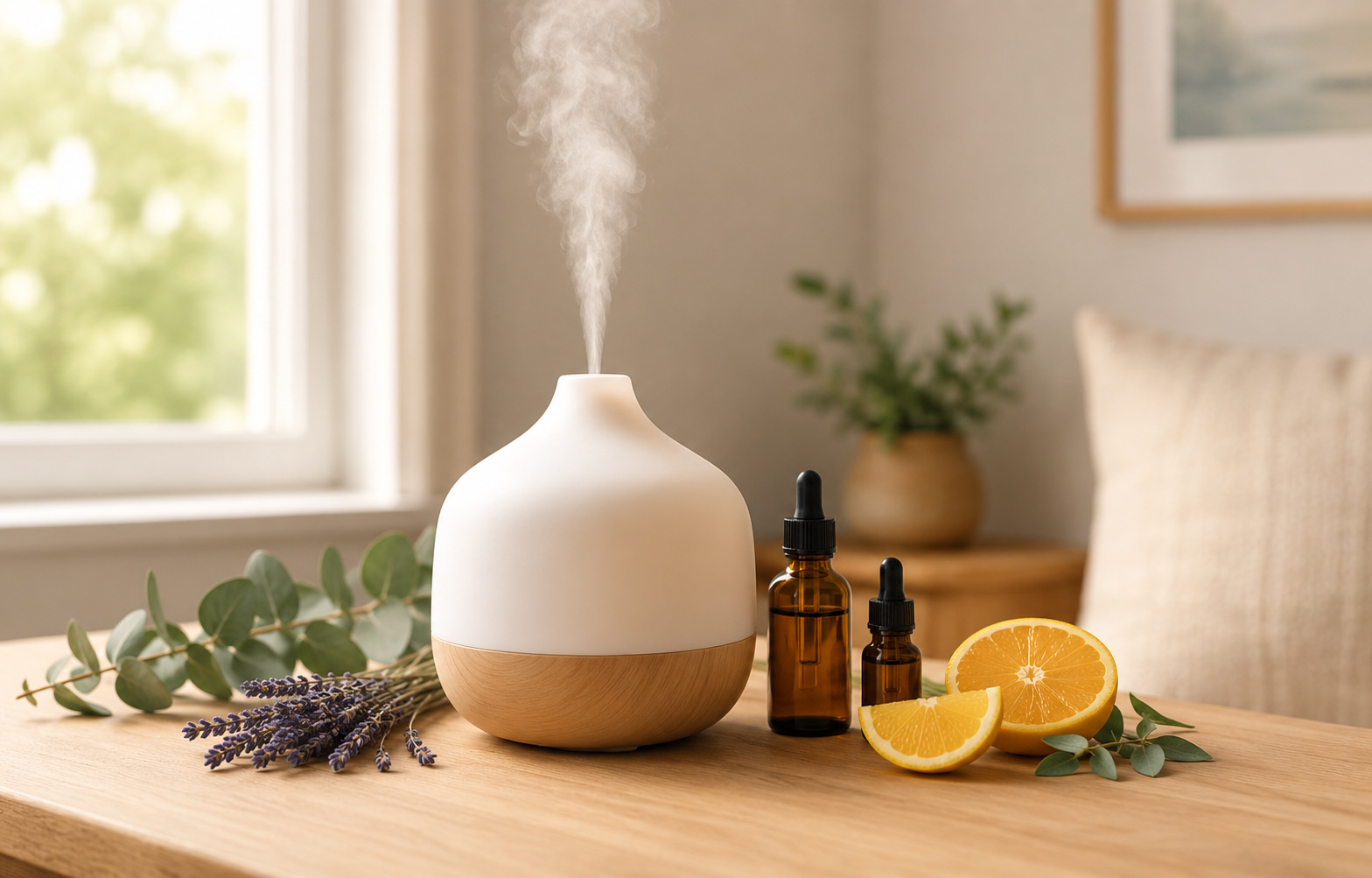
An ultrasonic diffuser is one of the easiest and most effective ways to distribute essential oils throughout a room.
The diffuser combines water with a few drops of essential oil and releases the mixture into the air as a fine mist. This produces a gentle fragrance that spreads gradually rather than overwhelming the space.
How to use a diffuser
- Fill the diffuser with clean water up to its recommended fill line.
- Add approximately three to six drops of essential oil.
- Replace the cover and switch the diffuser on.
- Allow the fragrance to circulate through the room.
- Add more oil only when necessary.
The correct number of drops will depend on the size of the diffuser, the size of the room and the strength of the oil. Begin with fewer drops and increase the amount gradually. Essential oils are concentrated, so a little can go a surprisingly long way.
Oils to try in a diffuser
For a fresh, clean fragrance, try:
- Lemon
- Grapefruit Pink/Ruby
- Eucalyptus
- Peppermint
- Tea Tree
- Lemongrass
For a softer, more relaxing atmosphere, consider:
- Lavender
- Chamomile Roman
- Frankincense
- Sandalwood
- Vetiver
For a warm and welcoming room, try:
- Sweet Orange
- Clementine
- Mandarin
- Tangerine
- Ginger
- Cinnamon Bark
2. Make a Simple Essential Oil Room Spray
A homemade room spray is ideal when you want to freshen a room quickly. It can be sprayed into the air after cooking, before guests arrive or whenever a room needs a fragrance boost.
Basic room-spray recipe
You will need:
- A clean 100 ml spray bottle
- Approximately 80 ml of distilled or boiled and cooled water
- Approximately 20 ml of high-proof alcohol or an appropriate essential-oil solubiliser
- 15 to 25 drops of essential oil
Add the alcohol or solubiliser and essential oils to the bottle first. Mix them thoroughly before adding the water. Close the bottle and shake well.
Shake the mixture before each use, as the ingredients may separate over time.
Spray it into the open air rather than directly onto people, pets, food, polished furniture or delicate fabrics. Test the spray on an inconspicuous area before using it near curtains, bedding or upholstery.
Fresh room-spray blend
- 8 drops Lemon
- 6 drops Grapefruit Pink/Ruby
- 4 drops Peppermint
This creates a crisp, uplifting scent that works particularly well in kitchens, home offices and living areas.
Floral room-spray blend
- 8 drops Lavender
- 5 drops Geranium
- 2 drops Ylang-Ylang
This blend produces a soft floral fragrance suitable for bedrooms, dressing rooms and guest areas.
3. Use a Ceramic Oil Burner
A ceramic oil burner uses a small candle to gently warm water containing essential oil.
Fill the upper bowl with water, add a few drops of essential oil and place a lit tealight candle underneath it. As the water warms, the fragrance begins to spread through the room.
Never place undiluted essential oil directly into the burner bowl. Always use water and make sure the bowl does not run dry.
Because this method involves an open flame, the burner must remain on a stable, heat-resistant surface and should never be left unattended. Keep it away from curtains, children and pets.
4. Create a Passive Scent Jar
Passive scenting is a good option for small spaces such as bathrooms, entrance halls, cupboards and home offices.
Fill a small decorative jar with one of the following:
- Baking soda
- Coarse salt
- Dried flowers
- Wooden beads
- Porous stones
Add approximately 10 to 20 drops of essential oil and stir or shake gently. Leave the container open or cover it with a piece of breathable fabric.
Refresh the scent with a few additional drops whenever the fragrance begins to fade.
Baking soda is particularly useful in areas that may develop stale odours, while wooden beads and porous stones can become attractive decorative fragrance accessories.
5. Scent Cotton Balls or Wooden Pegs
For an extremely simple solution, add two or three drops of essential oil to a cotton ball, felt pad or unfinished wooden peg.
Place it in a suitable location such as:
- Inside a cupboard
- Near a bin
- Behind a toilet
- On a shelf
- Near an entrance
- Inside a shoe cabinet
Avoid placing essential-oil-soaked materials directly against painted, plastic, varnished or delicate surfaces, as concentrated oils may cause staining or damage.
This method is inexpensive, requires no electricity and makes it easy to fragrance very small areas.
6. Add Essential Oils to Potpourri
Dried flowers, seed pods, bark and decorative botanicals can hold fragrance well.
Place the potpourri in a bowl and add approximately five to ten drops of essential oil. Mix it gently and allow the oil to absorb before displaying it.
Refresh the fragrance periodically with a few more drops.
Floral oils such as lavender, geranium and ylang-ylang work beautifully with dried flowers. Frankincense, myrrh, sandalwood and vetiver are better suited to woody arrangements. Citrus oils can add brightness to dried orange slices, cinnamon sticks and seasonal decorations.
7. Scent the Room While Cleaning
Essential oils can also be used to leave a pleasant fragrance after routine household cleaning.
A few drops can be added to certain homemade cleaning mixtures, but essential oils should not simply be poured into commercial cleaning chemicals. Different products may react unpredictably when mixed.
A safer approach is to use an essential-oil room spray after cleaning or to run a diffuser once the room is tidy.
Fresh oils that suit a recently cleaned room include:
- Lemon
- Eucalyptus
- Peppermint
- Tea Tree
- Grapefruit
- Lemongrass
- Rosemary
The goal is to complement a clean room with fragrance, not to use essential oils as a replacement for proper cleaning and ventilation.
Essential Oil Blends for Different Rooms
One of the pleasures of using essential oils is being able to create a different atmosphere in every part of the home.
Bright Kitchen Blend
- 3 drops Lemon
- 2 drops Sweet Orange
- 1 drop Peppermint
This creates a fresh citrus scent with a cool, crisp finish.
Welcoming Living-Room Blend
- 3 drops Sweet Orange
- 2 drops Frankincense
- 1 drop Ginger
The result is warm, inviting and slightly spicy.
Peaceful Bedroom Blend
- 3 drops Lavender
- 2 drops Frankincense
- 1 drop Vetiver
Vetiver has a strong earthy aroma, so one drop may be enough.
Fresh Bathroom Blend
- 3 drops Eucalyptus
- 2 drops Lemon
- 1 drop Tea Tree
This produces a clean, sharp scent that suits bathrooms and laundry areas.
Productive Home-Office Blend
- 3 drops Rosemary
- 2 drops Lemon
- 1 drop Peppermint
This is a bright herbal blend that helps create a fresh working environment.
Soft Floral Blend
- 3 drops Lavender
- 2 drops Geranium
- 1 drop Ylang-Ylang
Ylang-ylang can dominate a blend, so use it sparingly.
Warm Winter Blend
- 3 drops Sweet Orange
- 1 drop Cinnamon Bark
- 1 drop Clove Bud
- 1 drop Ginger
Cinnamon and clove are powerful oils. Begin with a small amount and avoid over-diffusing them.
Grounding Evening Blend
- 3 drops Frankincense
- 2 drops Sandalwood
- 1 drop Myrrh
This creates a deep, resinous and woody fragrance suited to quiet evenings.
How to Create Your Own Essential Oil Blend
A balanced room fragrance often combines three types of scent.
Top notes are usually the first aromas you notice. They tend to smell light, bright and fresh. Examples include lemon, grapefruit, orange, mandarin, tangerine, eucalyptus and peppermint.
Middle notes form the main character of the blend. Examples include lavender, geranium, rosemary, tea tree, lemongrass and ylang-ylang.
Base notes are deeper aromas that can help give the blend warmth and depth. Examples include frankincense, myrrh, sandalwood, vetiver, vanilla absolute and rock rose.
A simple starting ratio is:
- Three drops of a top note
- Two drops of a middle note
- One drop of a base note
This is not a strict rule. Fragrance is personal, and some oils are considerably stronger than others. Experiment with small quantities and write down successful combinations so that they can be recreated later.
Choose a Fragrance for the Mood
When choosing an essential oil, think about how the room should feel.
For a bright and cheerful atmosphere, use citrus oils such as lemon, grapefruit, sweet orange, mandarin, clementine or tangerine.
For a cool and refreshing scent, try eucalyptus, peppermint, tea tree or rosemary.
For a soft floral room, consider lavender, geranium, rose absolute or ylang-ylang.
For something warm and comforting, try sweet orange, ginger, cardamon, cinnamon bark, clove bud or vanilla absolute.
For a deep, earthy fragrance, explore frankincense, myrrh, sandalwood, vetiver, spikenard or rock rose.
Important Safety Tips
Essential oils are highly concentrated and should always be used carefully.
- Follow the instructions supplied with the diffuser or scenting device.
- Start with a small number of drops.
- Use essential oils in a well-ventilated room.
- Stop using the oil if anyone experiences coughing, headaches, nausea, dizziness, breathing discomfort or irritation.
- Keep bottles, burners, sprays and diffuser liquids away from children.
- Never swallow essential oils.
- Avoid direct contact with the eyes and skin.
- Clean spills immediately and prevent pets from licking contaminated surfaces.
- Never leave a candle-powered burner unattended.
- Consult an appropriate healthcare professional before using essential oils around babies, during pregnancy or where someone has asthma, epilepsy, allergies or another medical condition.
- Ask a veterinarian before diffusing essential oils in a home with pets, particularly cats, birds or animals with respiratory conditions.
- Make sure pets can leave the room and are not confined near an operating diffuser.
Natural does not automatically mean harmless. Correct quantities, responsible storage and sensible ventilation all matter.
Give Every Room Its Own Signature Scent
Essential oils make it possible to change the character of a room with just a few carefully chosen drops. A fresh citrus blend can brighten the kitchen, lavender can soften the atmosphere of a bedroom, and frankincense or sandalwood can add warmth and depth to a living area.
Start with one or two familiar oils, experiment with simple blends and gradually build a collection that suits different rooms and occasions.
Shop the range of Escentia pure essential oils from ShopHaven and discover new ways to bring fresh, floral, citrus, spicy and woody fragrances into the home.
